Services and bookings · Cusco and the Sacred Valley
A website to sell services in Cusco: tours, nights and classes
A sales website for people who sell dates and places, not products: the customer sees if there's room, what it costs and how to leave the deposit, without messaging you three times.
- Landing page from S/ 500
- Website + assistant S/ 1200
- Deposit by Yape or Plin
- Spanish and English
A website that sells services, not things
Selling a tour, a night at your lodge or a spot in your workshop isn't like selling a mug. The customer takes nothing home: they buy a date, a place in a group, an experience they haven't had yet. So they need to know three things before paying: whether there's room on the day they want, exactly how much it costs and how to secure the booking.
A sales website for services is built around those three answers. If you sell products — clothes, tea, crafts — the path is different: a cart, photos per item, shipping. That's what the online shop page is for. Here we're talking about people who sell time and places, which in Cusco and the valley is most businesses.
Your customer's path to payment
Pick what you sell and tick what your customer already finds on their own, without messaging you. You get the whole path to payment, how many taps it takes and where you might lose them.
What do you sell?
What does your customer find today without asking you?
Taps until payment
9 taps
4 questions they'll ask before paying · 2 gaps after payment
- missing · +2 questionsSees departure dates and free spotsThey have to ask if there's space and wait for your answer. If you reply late, they book elsewhere.
- readySees the price per person and what's included
- readySees photos of what they'll experience, not just the logo
- readyTaps a button and messages you with the text ready
- missing · +2 questionsFinds how to leave the deposit: Yape, Plin or bank transferThey ask how to pay and wait for the details. Between the “yes” and the payment is where most bookings cool down.
- missingGets a written confirmation of what they bookedThey paid and don't know if it arrived: they write to ask and arrive with doubts.
- missingGets the pickup time and what to bring the day beforeWithout a reminder, someone forgets the time or can't find the place.
Tell me about your path on WhatsApp →
A tap is one customer action: looking, tapping or asking. Each question adds a back-and-forth of messages. We don't measure percentages: we look at where the path gets longer.
Each cord is a step; each knot, a customer tap. Red knots are questions they have to ask you because the information wasn't in sight. The dotted line is the moment of payment.
What makes a website sell
- One path, not a menuSomeone arriving from Instagram or Google has to see on the first screen what you sell, when and for how much. Ten menu sections pull them away from the button.
- The price with what's includedA price per person that says what's included — transport, lunch, entry fees — sells better than a bare number, because it answers the next question before it's asked.
- Clear deposit and cancellation rulesHow much is paid up front, until when it can be cancelled and what happens if it rains. Written once, it stops being argued in every chat.
- Answers at night tooTravellers plan from another time zone. If nobody answers until tomorrow, they book with whoever answered today.
The deposit, without a payment gateway
A website of your own doesn't charge cards or store bank details, and most valley businesses don't need it to. What it does is show, at the right moment, how to pay: your Yape, your Plin or the transfer details, with the deposit amount already worked out.
The customer pays, sends the screenshot and you confirm. If confirming by hand eats your time, automation makes the payment and the booking land by themselves in a table on your phone; it costs from S/ 300 per process. That way the path ends in a recorded booking, not in a conversation you have to dig out of a hundred chats.
Try it: an assistant that builds the tour and leads to the booking
In the demo, an assistant for a sample agency asks how many days you have and what you like, builds a plan with tours and ends in a booking button. With your details, it does the same with your departures and your prices. It uses a shared AI, with only a few tries a day.
The demo uses a shared AI with a daily limit. Write to me and I'll show it to you live.
Write on WhatsApp →A website that sells a night
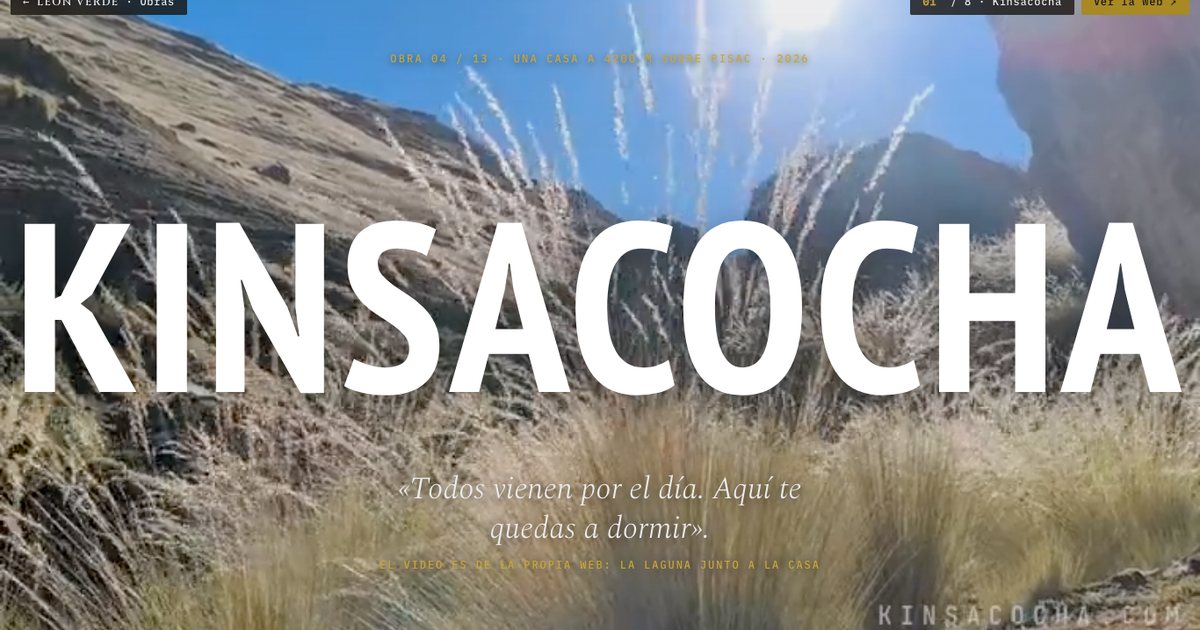
You don't need an expensive booking system to sell a service. Kinsacocha sells something very specific — spending the night above Pisac — with a single page that leads to a single button:
What a website that sells costs
For a website that sells, the most complete option is “Website + Assistant”: the landing page plus a WhatsApp assistant that answers dates, prices and bookings while you work. It costs S/ 1200 plus S/ 150 a month, with the first month included.
If for now you'd rather answer messages yourself, the “Start” landing page costs S/ 500 and is ready in 7 days. The assistant can be added later, from S/ 400 for setup.
Website + Assistant
S/ 1200 ≈ US$ 355
+ S/ 150 a month (first month included)
A landing page and a WhatsApp assistant together: customers go from the website straight to your WhatsApp.
“Start” landing page
S/ 500 ≈ US$ 145
7 days
One page, 5–6 sections, Spanish + English, a WhatsApp button, domain and hosting for the first year.
Other pages for the valley
Websites and shops
Frequently asked questions
How do I create a website to sell my tours or my nights?
Start with the customer's path: what they need to see to decide (dates, price, photos) and how they leave the deposit. The site is built so that path has as few steps as possible. The tool above shows you where yours gets longer.
Does the website take card payments?
No. It shows how to pay — Yape, Plin or bank transfer — and the deposit amount; you confirm when it arrives. If confirming by hand eats your time, it can be automated.
Do I need a booking system?
For most valley businesses, no: a clear page, a WhatsApp button with a ready message and, if you get lots of messages, an assistant that answers dates and prices are enough.
What does a sales website cost?
The “Start” landing page costs S/ 500. With a WhatsApp assistant, “Website + Assistant” costs S/ 1200 plus S/ 150 a month, with the first month included.
I sell products, not services. Is this page for me?
For products the path is different: a cart, photos per item and shipping. Have a look at the online shop page for Cusco, which is designed for that.